






Day of the Dead: a Mexican tradition that keeps memory alive in every home

Day of the Dead: A Celebration That Connects Past and Present
The Day of the Dead is one of Mexico’s most touching and representative traditions. It blends pre-Hispanic beliefs with Catholic customs and has become a symbol of identity, memory, and love for those who have passed away.
This celebration holds deep meaning for Mexican families. From the moment the altar is built, memories of departed loved ones return, filling the home with emotion and reflection. The tradition has been passed down through generations, and in recent years it has gained international recognition, especially thanks to the animated Disney film Coco (2017), which took three years to produce in order to authentically depict every detail of this unique holiday.
Pre-Hispanic Origins
Long before the Spanish arrived, the indigenous peoples of Mesoamerica — such as the Mexica, Maya, Purépecha, and Totonac — already honored death. They believed that the deceased continued to exist in another realm and that death was simply part of the natural cycle of life.
During their rituals, they offered food, flowers, and personal objects to help the souls on their journey to Mictlán, the land of the dead.
The Fusion with Catholic Tradition
When the Spanish arrived in the 16th century, missionaries tried to replace these indigenous beliefs with Christian festivals. However, the two traditions merged, combining the pre-Hispanic rituals with All Saints’ Day (November 1)and All Souls’ Day (November 2).
This fusion gave birth to what we now know as the Day of the Dead — a celebration that unites indigenous spirituality and Catholic faith.
The Week of the Dead
Although the main celebrations are on November 1 and 2, in many regions of Mexico the commemoration begins on October 27, with each day dedicated to different souls:
- October 27: animals that have passed away
- October 28: those who died in accidents or tragically
- October 29: souls who drowned or died alone
- October 30: forgotten souls without family or offerings
- October 31: unbaptized children
- November 1: deceased children (angelitos)
- November 2: deceased adults
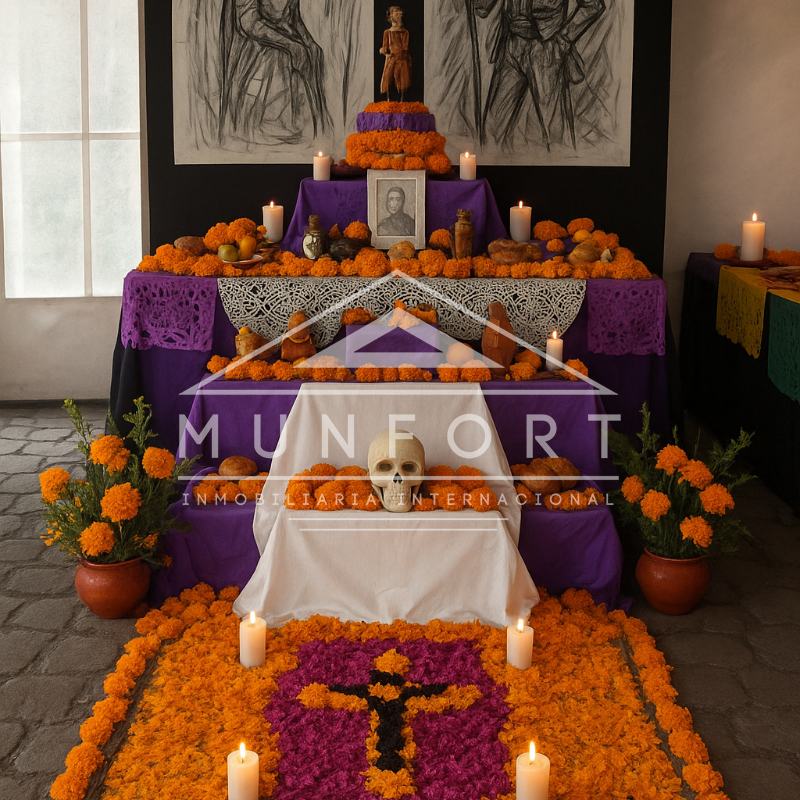
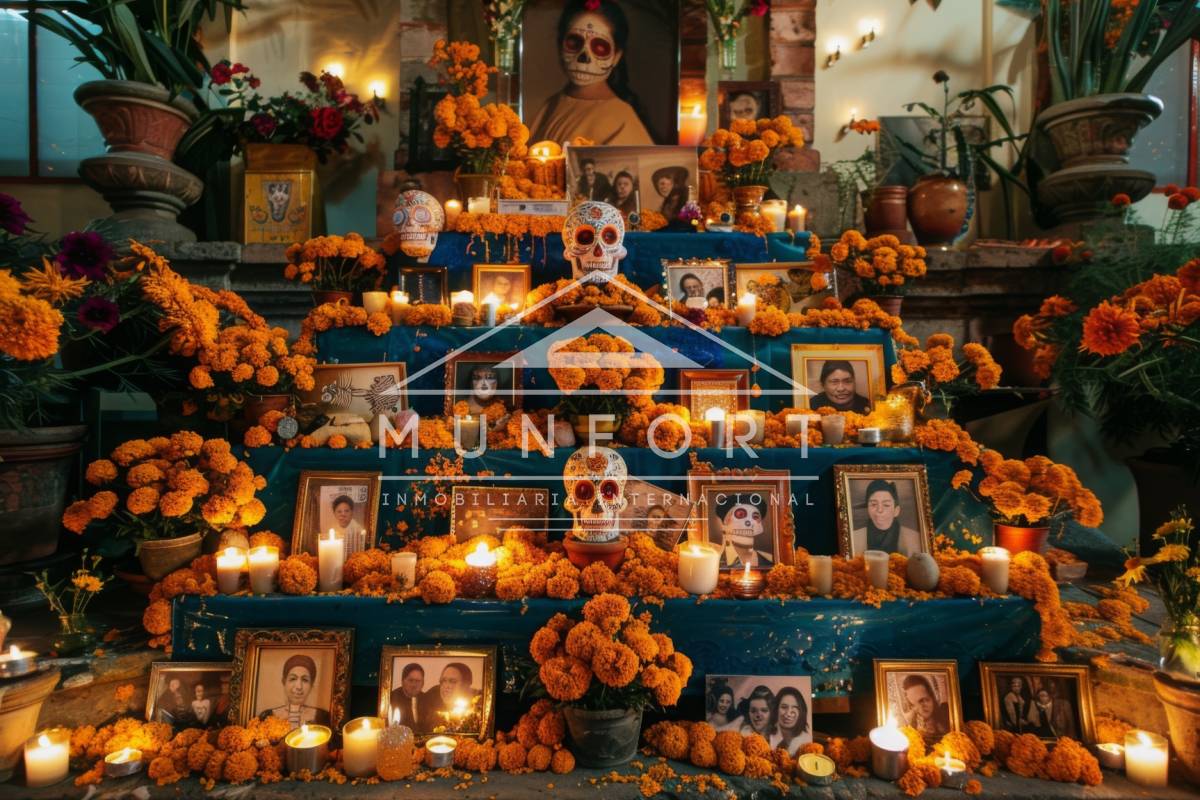
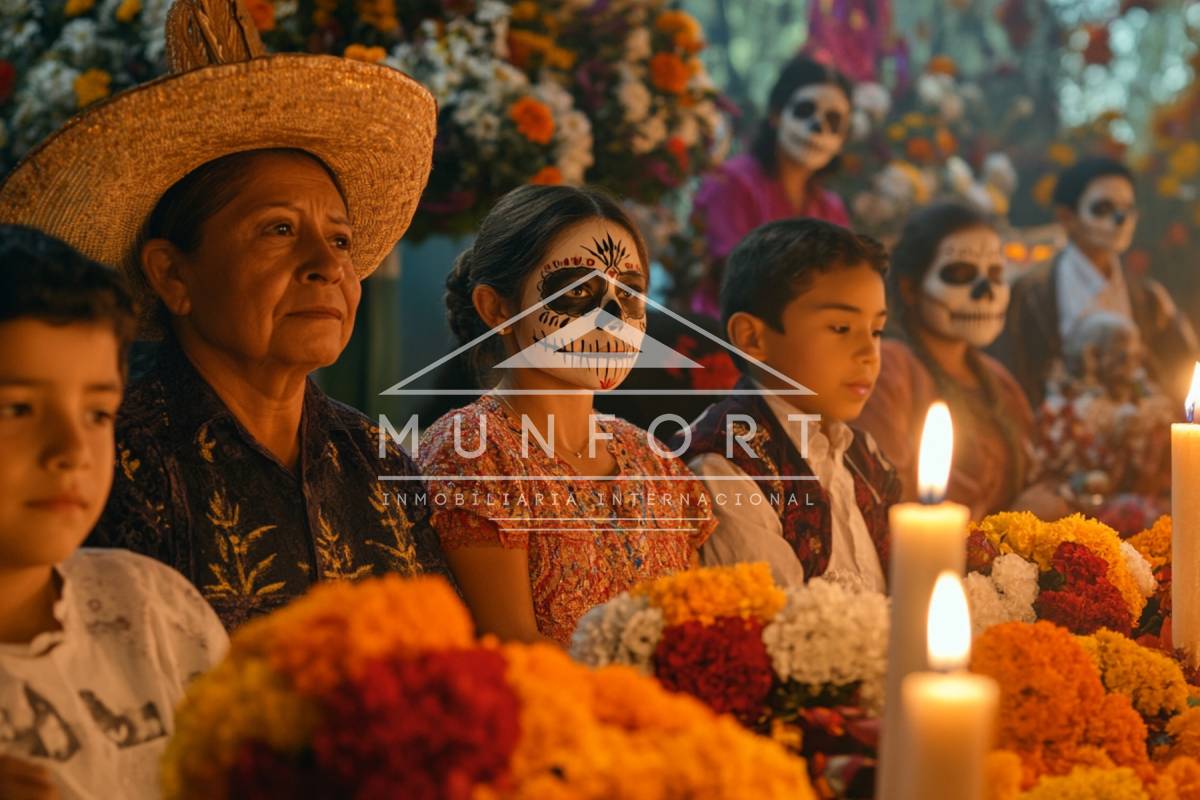
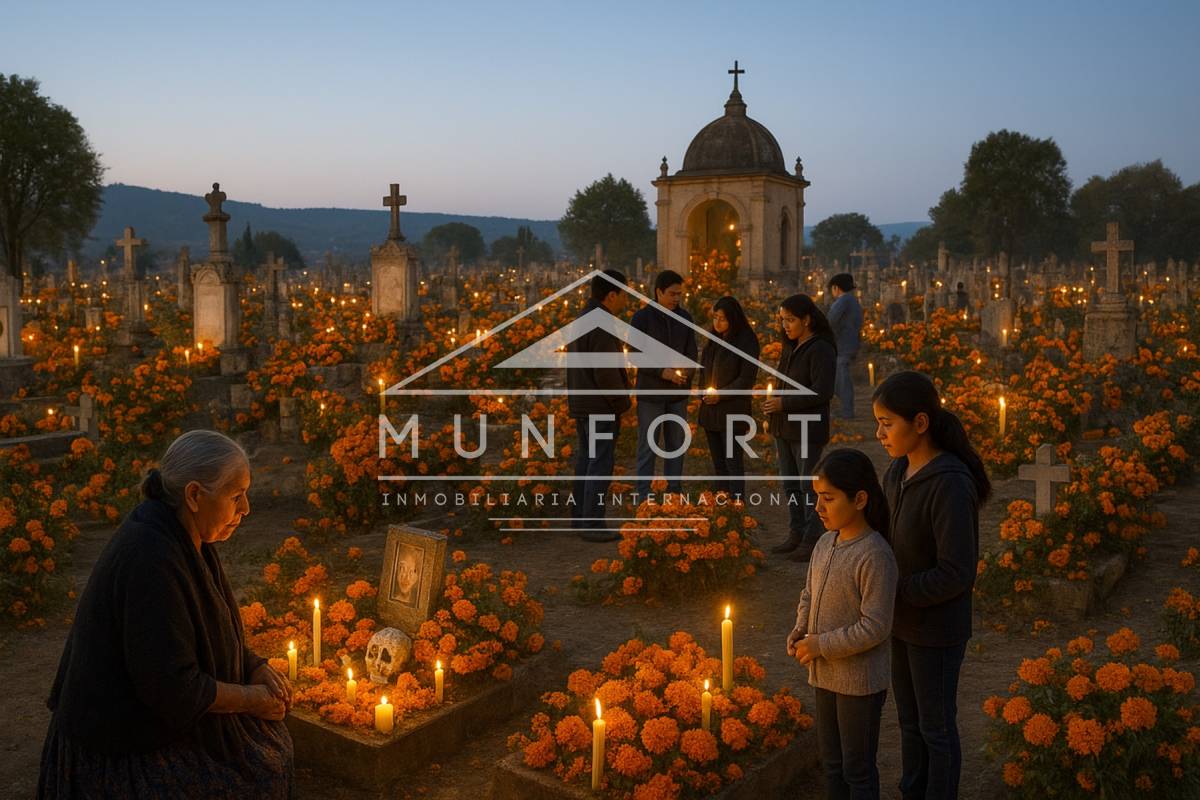
During these days, families prepare altars at home or visit cemeteries to decorate graves with flowers, candles, and photos, turning cemeteries into bright, colorful spaces filled with love and remembrance.
Elements and Meaning of the Altar (Ofrenda)
Every item on the altar carries deep spiritual and symbolic meaning:
| Element | Meaning |
|---|---|
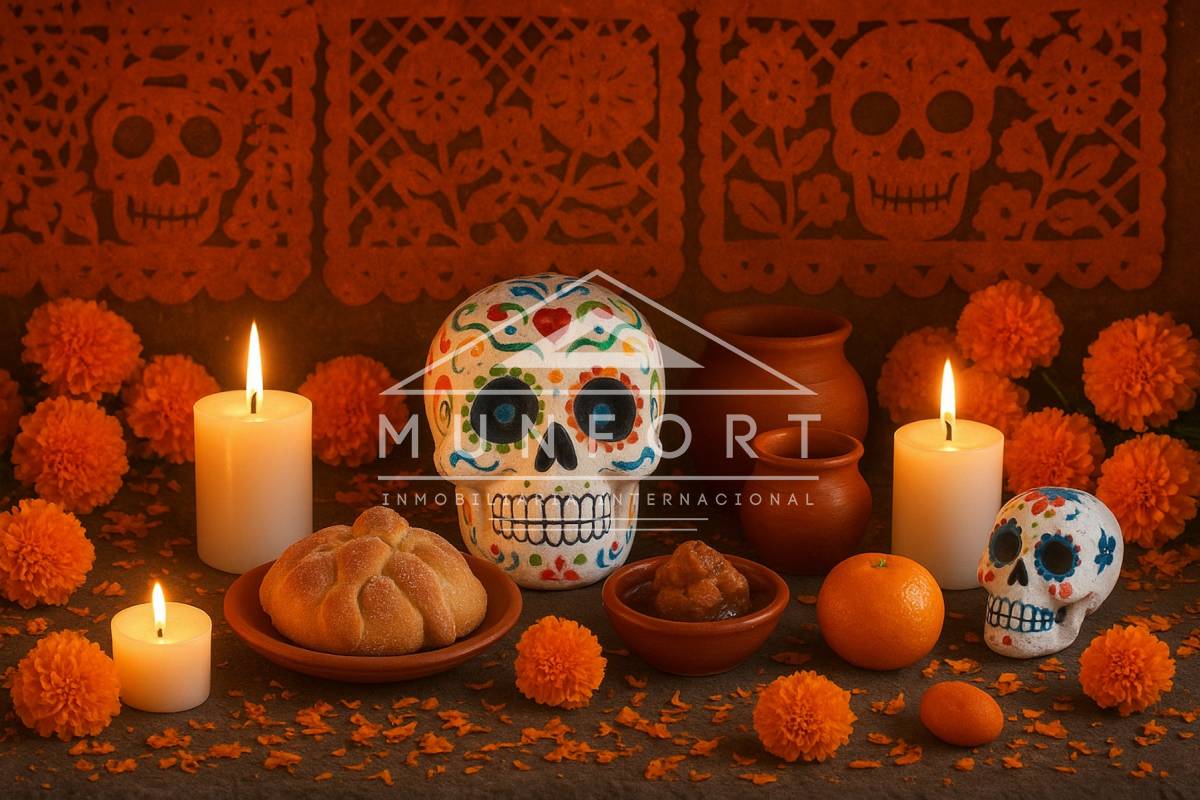
| Candles | Light that guides the souls back home |
| Marigold flowers (Cempasúchil) | Their color and scent mark the path of return |
| Pan de muerto (Bread of the dead) | Represents the cycle of life and death |
| Sugar skulls | Symbolize the sweetness of life and the inevitability of death |
| Photos of the departed | Keep the memory of loved ones alive |
| Salt | Purifies and protects the soul |
| Water | Quenches the spirit’s thirst after a long journey |
| Traditional food (mole, tamales, tequila) | Honors the tastes and joys of the departed |
| Papel picado (decorative paper) | Represents air and the joy of reunion |
| Copal or incense | Purifies the space and helps souls return |
A Symbol of Love, Memory, and Unity
The Day of the Dead altar is more than a tradition — it is an act of love that brings families together and strengthens the bond between generations. Every aroma, flavor, and color creates a bridge between the world of the living and the dead, reminding us that love transcends time and absence.
In many communities, families spend the night in cemeteries, surrounded by music, prayers, and food, in an atmosphere filled with respect, gratitude, and celebration.
Regional Diversity and Global Recognition
Each region of Mexico celebrates the Day of the Dead differently.
In Michoacán, the Purépecha communities illuminate cemeteries with thousands of candles.
In Oaxaca, the celebration combines parades and dances.
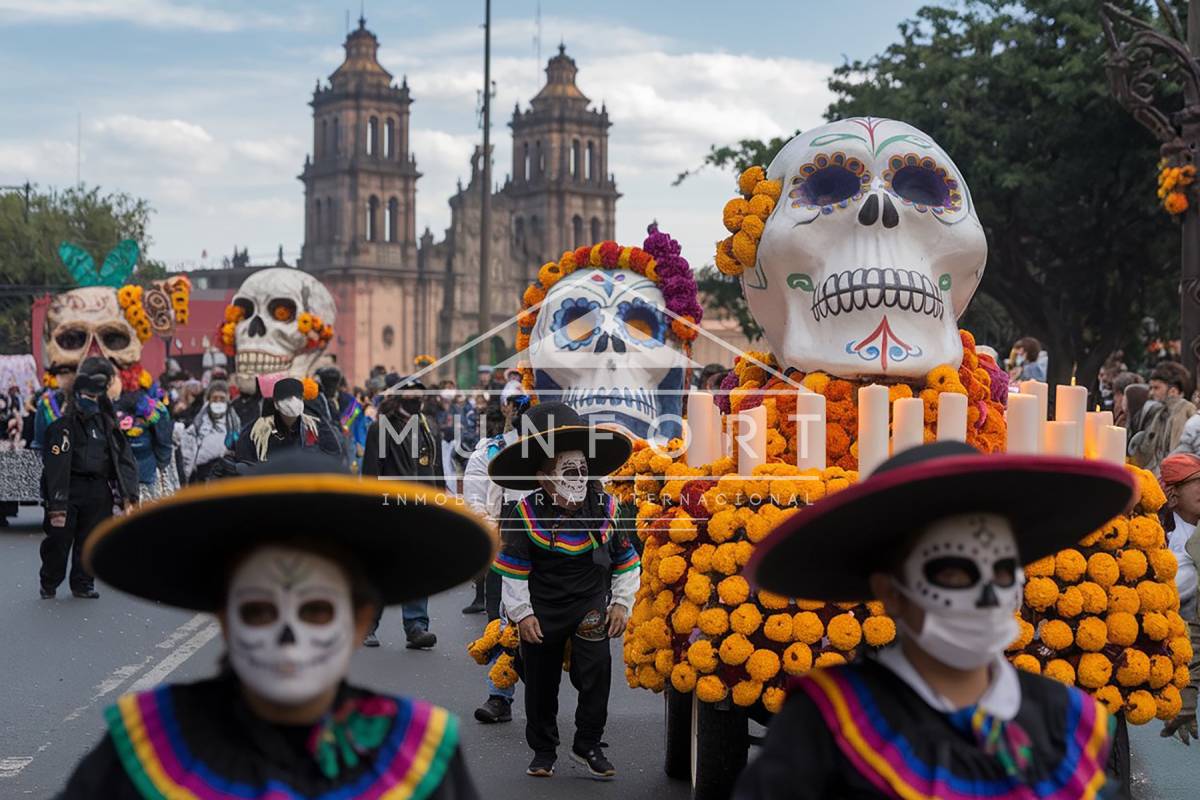
In Mexico City, the Día de Muertos parade has become a world-renowned cultural event.
In 2008, UNESCO declared the Day of the Dead Intangible Cultural Heritage of Humanity, recognizing it as a unique expression of love, respect, and remembrance for one’s ancestors.
In Essence
The Day of the Dead is not a sad occasion, but a celebration of life.
It reminds us that death does not erase the bonds we share with those we love — it transforms them into memory, tradition, and a cultural legacy that Mexico proudly shares with the world.
Image gallery
 Facebook
 Linkedin
 Twitter
 Email
Email



 Call
Call